Most content gets scrolled past in under two seconds. That is not an exaggeration, it is just how people move through their feeds now. The difference between a post that gets read and one that gets ignored usually comes down to the first line, not the idea behind it.
This is why storytelling hooks matter so much. A hook is not a catchy slogan or a clever headline. It is the opening line that makes someone pause mid-scroll because their brain wants to know what happens next. Understanding why that happens, and building a small toolkit of phrases that trigger it, can change how your content performs.
Why Hooks Work on a Psychological Level
Daniel Kahneman’s research on decision making describes two systems the brain uses to process information. System 1 is fast, automatic, and emotional. System 2 is slow, deliberate, and logical. Most people scrolling through a feed are operating almost entirely in System 1. A hook works because it speaks directly to that fast, instinctive part of the brain before the reader has consciously decided whether to engage.
Curiosity plays a major role here. The human brain is wired to seek closure, so an unfinished thought or an open question creates a small itch that needs scratching. That is why a phrase like “here’s the part nobody expects” pulls people in even when they have no idea what the story is about yet. The brain simply wants to close the gap.
Emotion does something similar but through a different channel. Research into narrative transportation theory shows that when people engage with a story, rather than a plain statement of facts, the brain activates far more than the language centers responsible for basic comprehension. It starts to process the story the way it would process a lived experience. That is a big reason story-driven content consistently outperforms plain announcements or advertising copy, whether that is a caption, an email, or a landing page.
The Phrases That Do the Heavy Lifting
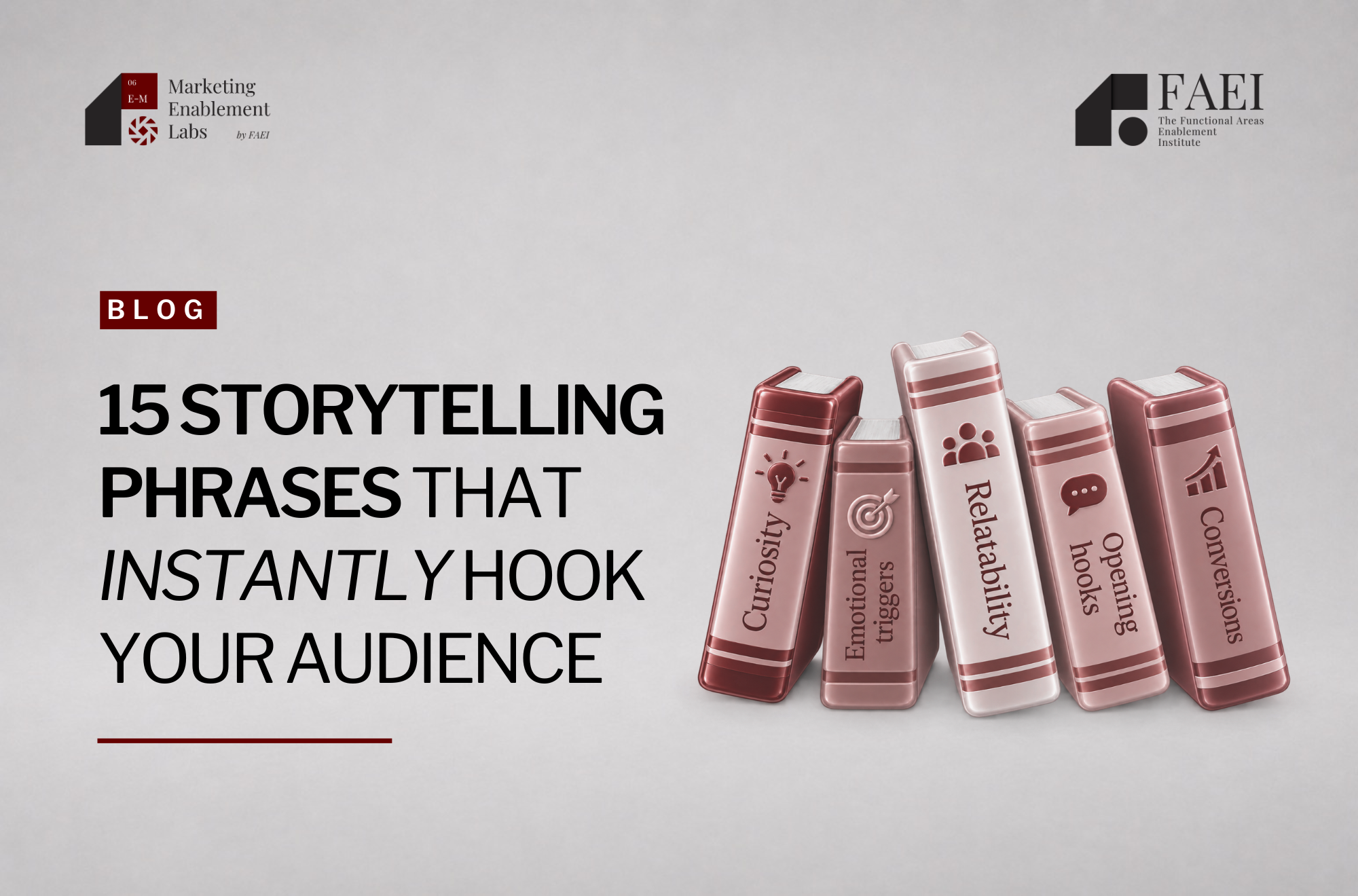
Not every hook works the same way. Some create suspense, some build trust, some invite the reader to see themselves in the story. Here are fifteen that consistently perform well, organized by the psychological trigger behind them.
Opening hooks that build suspense
- “You won’t believe how this started…”
- “Here’s the part nobody expects…”
- “It all changed in one moment…”
These work by opening a gap the brain wants closed. They promise a turning point without revealing it, which is usually enough to keep someone reading past the first line.
Emotional triggers that build trust
- “I haven’t told anyone this before…”
- “This still gets to me when I think about it…”
- “This was the moment I almost walked away…”
Vulnerability signals authenticity, and authenticity is one of the strongest trust builders in content today. Audiences are more skeptical of polished brand messaging than they used to be, and lines like these read as honest rather than scripted.
Curiosity sparks that create urgency
- “What if everything you knew about this was wrong?”
- “I wish someone had told me this earlier…”
- “This one mistake set me back months…”
These challenge an assumption or hint at a cost of not knowing something, which taps into loss aversion as much as curiosity. People are motivated to avoid missing out on information nearly as much as they are motivated to gain it.
Relatability lines that build empathy
- “Does this sound familiar?”
- “You’ve probably felt this too…”
- “You’re not behind, you’re just exhausted from…”
These work because they remove the distance between the storyteller and the reader. Instead of talking about an experience, they invite the reader into it, which is one of the reasons audiences increasingly favor creators and brands that feel like a peer rather than a broadcaster.
Transition bridges that keep momentum
- “But here’s the part that actually matters…”
- “And that’s when it clicked…”
- “Fast forward to today…”
Good hooks do not stop at the first line. These phrases carry the reader through the middle of a story without losing the pace the opening line built, which matters because most drop off happens in the transition, not the intro.
Using These Without Sounding Scripted
The risk with any list of proven phrases is that they start to feel formulaic once an audience has seen them a hundred times across different accounts. The fix is not to avoid them, it is to attach them to something specific. “This one mistake set me back months” only works if the mistake that follows is real, detailed, and yours. The phrase opens the door, but the specificity is what keeps someone standing in the doorway.
Treat these as starting points rather than templates to fill in. Test a few, watch which ones your specific audience responds to, and build your own shortlist from there.